


Near-peer adversaries have spent the last decade studying how the U.S. military and its allies communicate — and building capabilities specifically designed to sever those links at the worst possible moment. Electronic warfare, precision jamming, and cyberattacks on network infrastructure are no longer exceptional threats. They are standard tools in adversary doctrine, demonstrated repeatedly in Ukraine and modeled extensively in Indo-Pacific wargames.
The question is no longer if your communications will be contested. It’s whether your team can keep executing when they are. At REDCOM, we built the technology to ensure the answer is always yes.
What Are DDIL Communications?
DDIL stands for Denied, Degraded, Intermittent, and Limited. It describes operational environments where normal communications are disrupted, constrained, or unavailable.
- A denied environment occurs when communications are completely blocked or unavailable. This may be caused by jamming, cyberattacks, physical destruction of infrastructure, terrain obstruction, or the loss of a critical network path.
- A degraded environment means communications still exist, but performance is reduced. Users may experience latency, packet loss, reduced throughput, poor voice quality, or unreliable connectivity.
- An intermittent environment is one where communications are unpredictable. Links may drop and reconnect due to mobility, terrain, power limitations, electronic warfare, or the movement of relay assets.
- A limited environment is defined by constrained bandwidth or restricted access to communications resources. In these cases, mission traffic must be prioritized, and systems need to move essential information with minimal overhead.
For acquisition leaders and military decision-makers, the importance of DDIL is straightforward: communications systems can no longer be evaluated only by how well they perform on a stable network. They must be evaluated by how well they preserve operational capability when that network fails.
Why DDIL Environments Create a C2 Problem
Many modern communications platforms were built around the assumption that IP networks, servers, cloud infrastructure, and high-bandwidth connectivity would be available. That assumption is increasingly dangerous.
In a contested environment, adversaries may attempt to attack both ends of the communications stack. At the top, they can target sophisticated IP and cloud-connected systems through cyber effects, jamming, disruption, or network denial. At the bottom, they can destroy or degrade host-nation infrastructure, fixed sites, cellular towers, or other physical communications assets.
When that happens, the fight often shifts into the middle layer: RF communications, tactical radios, MANETs, SATCOM, transport diversity, and whatever link is still available.
This is where many systems struggle. A platform that only works across one transport path gives commanders one way to communicate. A system that depends on a centralized server can lose capability when that server is unreachable. A solution that requires manual reconfiguration under pressure can slow the operational tempo at the worst possible time.
DDIL resilience is not about having one backup radio. It is about building a communications architecture that can adapt as conditions change.
DDIL Requires Interoperability, Not Just Connectivity
A common mistake in DDIL planning is treating connectivity as the goal. Connectivity matters, but it is not enough.
The real requirement is interoperability under stress.
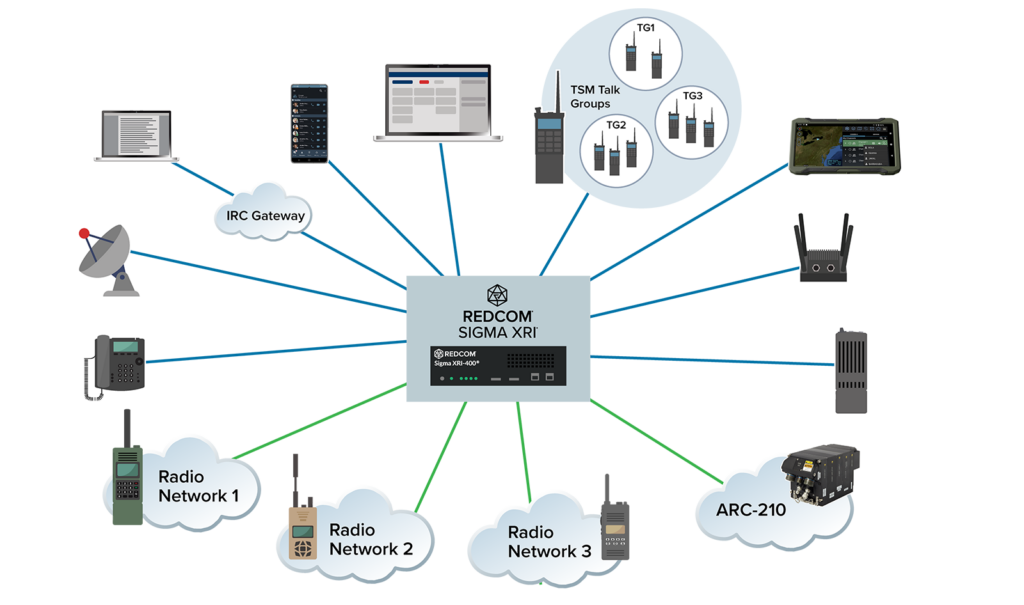
In practical terms, that means a commander should be able to communicate across IP endpoints, tactical radios, SATCOM links, MANETs, cellular networks, SIP devices, and legacy analog infrastructure without forcing operators to manage a different tool for every path.
It also means systems need to bridge old and new technology. In a denied environment, legacy infrastructure may become the only available path. In a degraded environment, a lower-bandwidth RF link may become more valuable than a high-throughput network that cannot be trusted. In a joint or coalition environment, multiple radios, waveforms, encryption types, and vendor ecosystems may need to work together.
That is why REDCOM views interoperability as a resilience strategy.
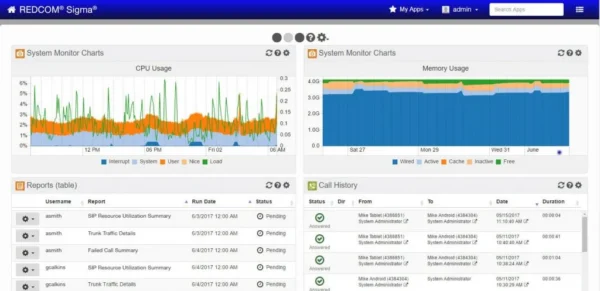
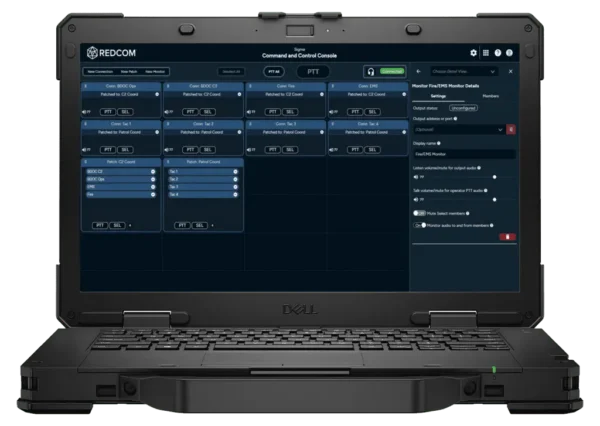
REDCOM Siga is designed to unify communications across disparate networks and endpoints, giving operators a single platform to manage voice, video, chat, radio interoperability, conferencing, and C2 communications. Rather than forcing organizations to rip and replace existing assets, Sigma helps bridge what is already in the field with the next-generation systems being introduced.
For DDIL operations, that flexibility matters. The best communications path is not always the newest one. It is the one that still works.
Layered Communications
Sigma builds multi-path survivability into its core from the ground up. Think of it as a layered communications stack. When one path fails, Sigma lets warfighters rapidly move on to the next.
A practical example of this fallback sequence might look something like this: Starlink → SATCOM → 3G/4G/5G Terrestrial Cellular → HF Radio → Legacy Infrastructure (including analog adapters for landlines or host-nation POTS). Each step down the stack represents a viable, tested communications path, not a placeholder.
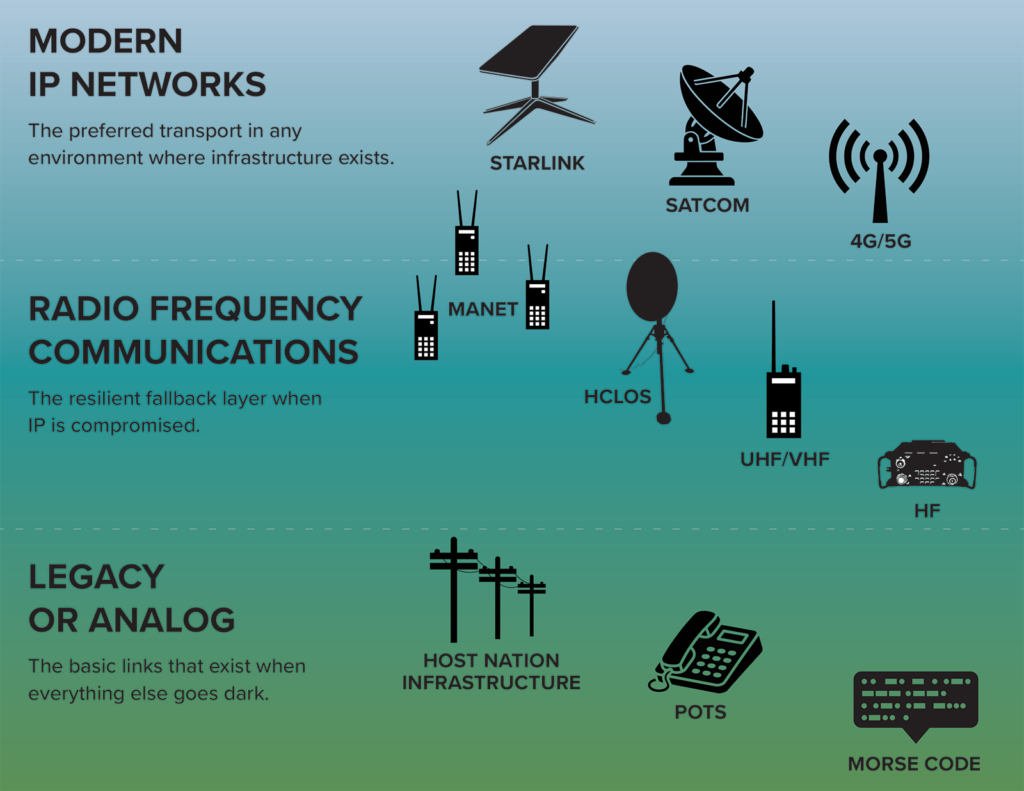
The Ukraine conflict reinforced this reality: adversaries haven’t been stopped by countermeasures, but they’ve been forced back onto older, less capable technology by persistent, layered resistance. The lesson is clear: cheap, attritional, and reusable tools operating across multiple technology layers are the future of contested communications. That’s where REDCOM has always operated.
A note on technology pushdown
As more capability is pushed to the tactical edge, cyber risk and system complexity increase. Every added layer of technology is a potential attack surface. REDCOM’s architecture accounts for this, maintaining a minimal operational footprint that reduces exposure without sacrificing capability.
Auto-PACE: Turning a Planning Concept into an Operational Capability
PACE planning is familiar across military communications: Primary, Alternate, Contingency, Emergency.
The challenge is not understanding PACE. The challenge is executing it when the situation is deteriorating.
If a primary path fails and an operator has to manually reconfigure connections, rebuild patches, redirect traffic, or troubleshoot network settings under pressure, the plan may exist on paper but fail in execution. DDIL environments reduce the time and attention available for manual intervention.
REDCOM Sigma supports an Auto-PACE approach by helping communications move across available transport paths based on a preconfigured priority order. When a network path is disrupted, Sigma can re-establish communications over the next available transport with minimal operator involvement.
That can include IP, SATCOM, 4G/5G, MANET, RF, and analog paths.
For commanders, this means the communications plan is not trapped in a binder or briefing slide. It becomes part of the operational architecture. For program managers, it means resilience can be built into the solution rather than relying entirely on user action during a crisis.
Auto-PACE is especially important in missions where seconds matter. A voice patch, command net, or coordination channel should not disappear simply because one path is jammed, blocked, or unavailable.
MANET, SDR, and Transport Diversity in DDIL Environments
Electronic warfare is one of the primary forces driving DDIL conditions. Frequency jamming, GPS spoofing, directed interference, and attacks against fixed communications paths can reduce the effectiveness of systems that rely on a single route or predictable signal.
That is why transport diversity is critical.
Mobile Ad-Hoc Networks, or MANETs, provide a self-forming, self-healing mesh approach that can route around interference and support mobile users without relying on fixed infrastructure. In a DDIL environment, MANET transport can help keep communications moving even as nodes shift, paths change, or certain links become unreliable.
REDCOM Sigma can leverage MANET as a transport backbone, allowing Sigma instances and connected endpoints to communicate across a resilient mesh. That means a user on one side of a disrupted area can still reach users, radios, or SIP endpoints on the other side when the MANET path remains available.
Software-defined radios can add another layer of flexibility. Because SDRs can support adaptable waveforms and changing mission requirements, they can help increase spectrum agility in contested environments. REDCOM Sigma is designed to integrate with SDRs and other radio assets when they support compatible IP-based media transport.
The broader point is simple: no single path should define the mission.
In DDIL operations, commanders need the ability to use whatever transport remains available, whether that is SATCOM, terrestrial cellular, MANET, tactical RF, IP, or analog infrastructure.
REDCOM STRIKE: C2 Without the Footprint
In DDIL environments, capability only matters if it can move with the mission.
A large, vehicle-dependent communications system may be powerful, but it can also be difficult to deploy, easier to detect, and tied to terrain that supports vehicle access. That creates a problem for expeditionary forces, dismounted teams, retransmission sites, and units operating from temporary or concealed positions.
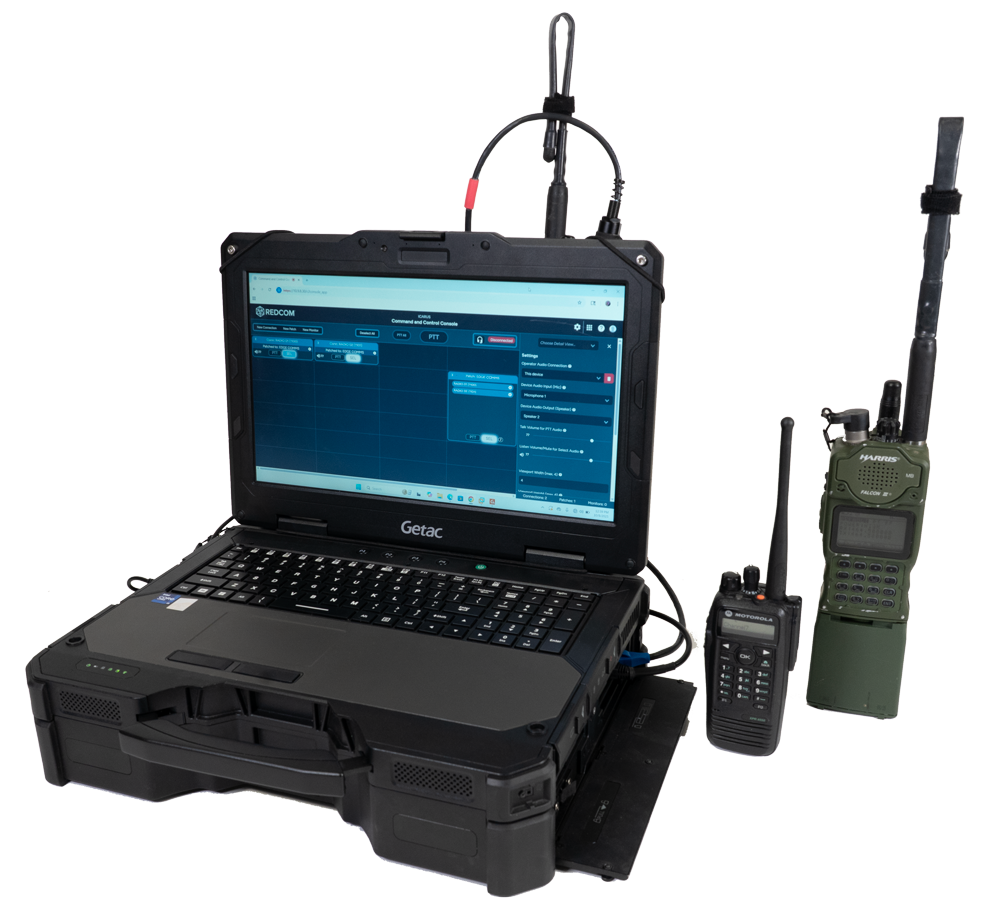
REDCOM STRIKE™, which stands for Sigma Tactical Radio Interoperability Kit for the Edge, is designed to solve that problem.
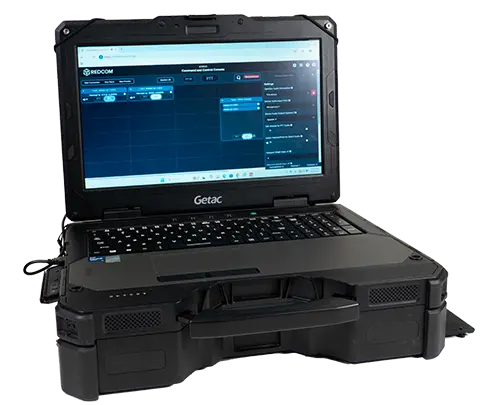
STRIKE is a low-SWaP tactical communications kit built around a ruggedized Getac X600 Pro laptop running REDCOM Sigma. It brings IP and RF communications together across SATCOM, 4G/5G, MANET, and legacy radio networks in a single portable solution.
Instead of deploying a large communications package, operators can carry an integrated command-and-control capability forward. STRIKE gives teams a practical way to establish interoperable communications in minutes, support radio crossbanding, connect disparate endpoints, and preserve C2 functions without requiring a full communications shelter or vehicle-based setup.
For acquisition and program teams, the value is not just portability. It is operational flexibility.
STRIKE can support expeditionary command posts, dismounted retransmission sites, special operations teams, disaster response units, National Guard missions, and forward-deployed tactical users who need to bridge communications quickly without adding unnecessary complexity.
In other words, STRIKE helps move command and control closer to the edge without forcing the edge to carry the weight of a traditional command center.
Preserving Session Integrity When Power or Connectivity Is Lost
One of the most overlooked requirements in tactical communications is what happens during forced movement, power loss, or unexpected shutdown.
In many systems, a hard shutdown can mean lost session state, dropped patches, broken routing, and manual restoration. In a DDIL environment, that creates operational risk. Operators may be forced to move quickly, shut equipment down, relocate, and re-establish communications from a new position. They may not have time to rebuild everything from scratch.
REDCOM Sigma is designed to preserve session integrity through power interruption and unexpected shutdown scenarios. For STRIKE users, that means active voice paths, patches, and routing configurations can be restored when the system comes back online.
That capability is especially relevant for mobile and expeditionary teams. If a unit needs to close the laptop, move to a new location, and reopen it, communications should resume without turning every displacement into a manual reconfiguration task.
For decision-makers, this is where DDIL resilience becomes operationally tangible. It is not just about surviving a degraded network. It is about reducing the human workload required to recover from disruption.
Mission-Readiness Checklist for DDIL Environments
DDIL is often discussed as a technical challenge, but at the command level, it is a readiness issue. Here are some questions you need to be able to answer:
- Automatically fall back across IP → RF → analog without operator input?
- Preserve session state and active voice patches across hard shutdowns and power loss?
- Can commanders maintain voice communications when IP connectivity is degraded?
- Can radio users, SIP endpoints, mobile users, and command posts communicate across different systems?
- Can teams relocate without losing active communications paths?
- Can the communications package move with the force instead of holding it back?
- Can operators manage the system without needing deep IT support in the field?
- Survive vigorous cybersecurity scrutiny and interoperability certification?
These are not abstract questions. They affect operational tempo, survivability, and the ability to make decisions faster than the adversary.
In a contested environment, communications superiority is not guaranteed by bandwidth alone. It comes from adaptability, interoperability, simplicity, and resilience.
If any of those are unchecked, your ability to operate in a Denied Environment has a gap. REDCOM closes it.
REDCOM Sigma Keeps C2 Moving in DDIL Environments
Modern missions cannot depend on perfect networks. The battlefield is too contested, the threat environment is too dynamic, and the pace of operations is too fast.
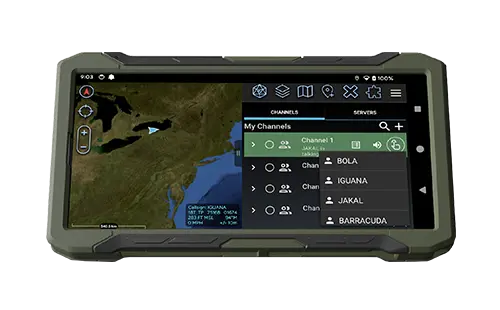
REDCOM helps military organizations prepare for that reality with communications solutions built for the tactical edge. REDCOM Sigma delivers interoperable C2 across voice, video, chat, radio, and IP-based communications. REDCOM STRIKE brings that capability into a rugged, portable kit for expeditionary and forward-deployed users. Sigma XRI extends radio interoperability across legacy and modern systems. Sigma Client gives users a familiar interface for PTT, voice, video, and chat from the devices they already carry.
When communications are denied, degraded, intermittent, or limited, the mission does not stop.
The communications architecture cannot stop either.
See how REDCOM Sigma and REDCOM STRIKE sustain command and control in DDIL environments.